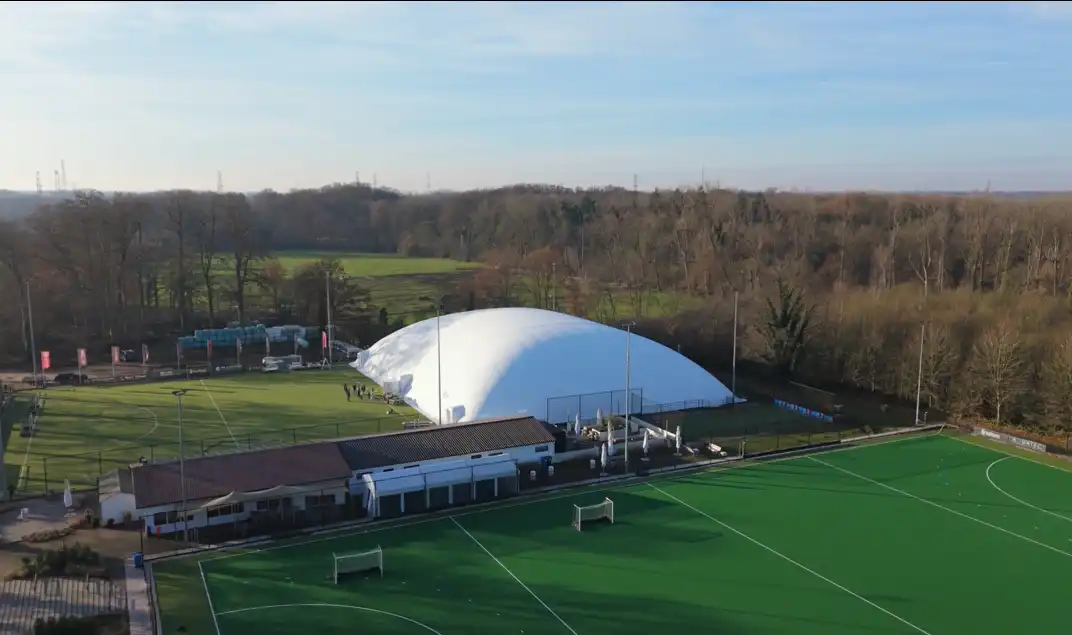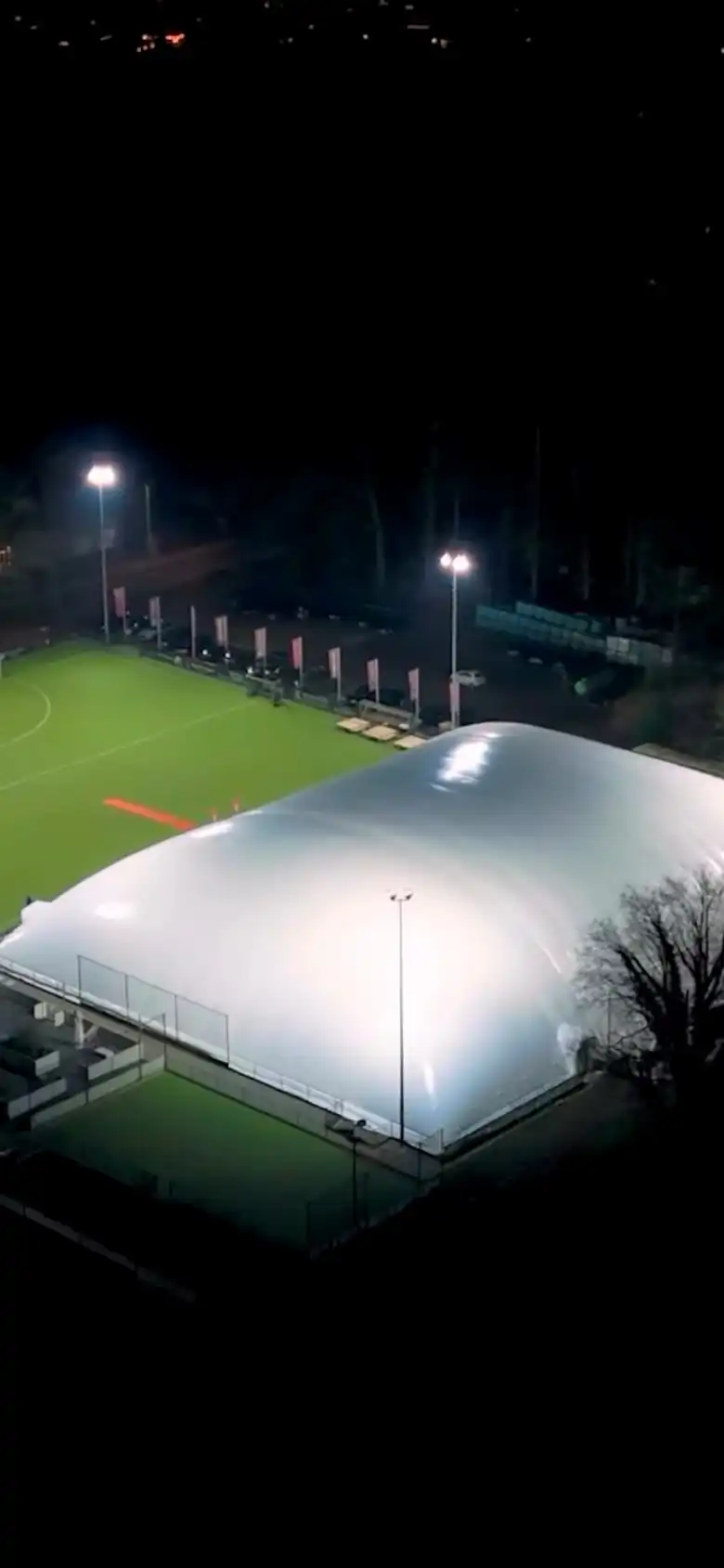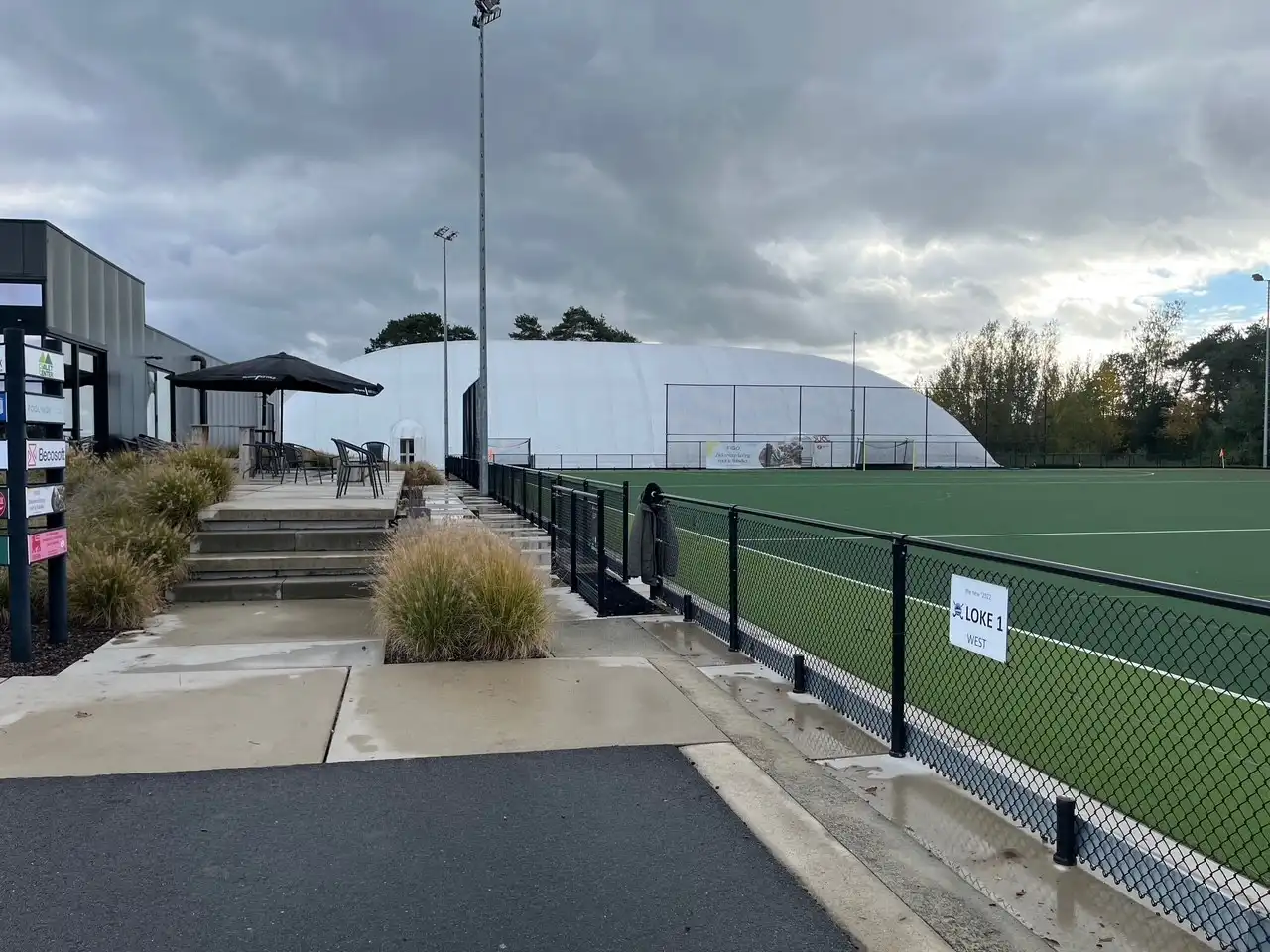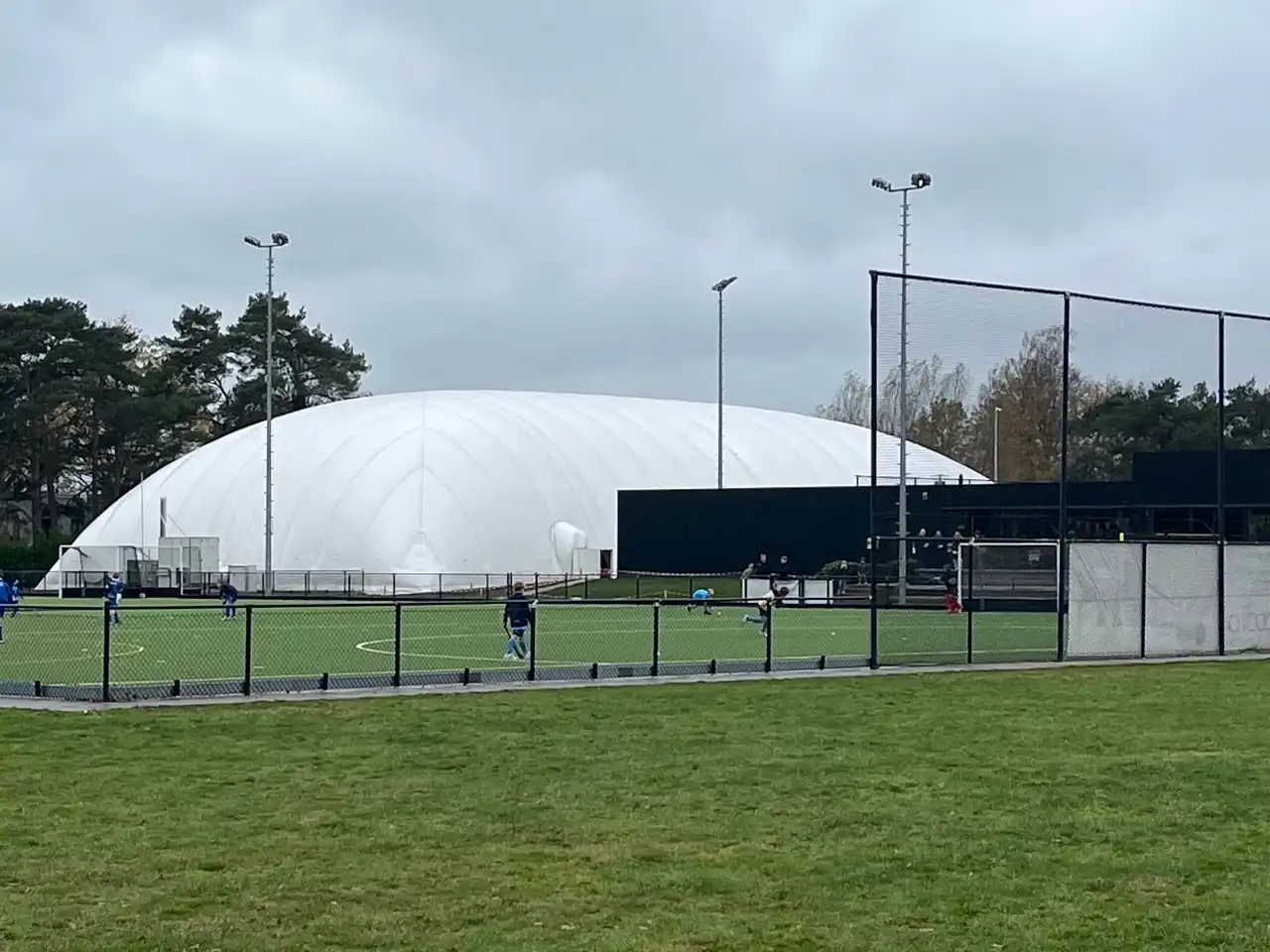
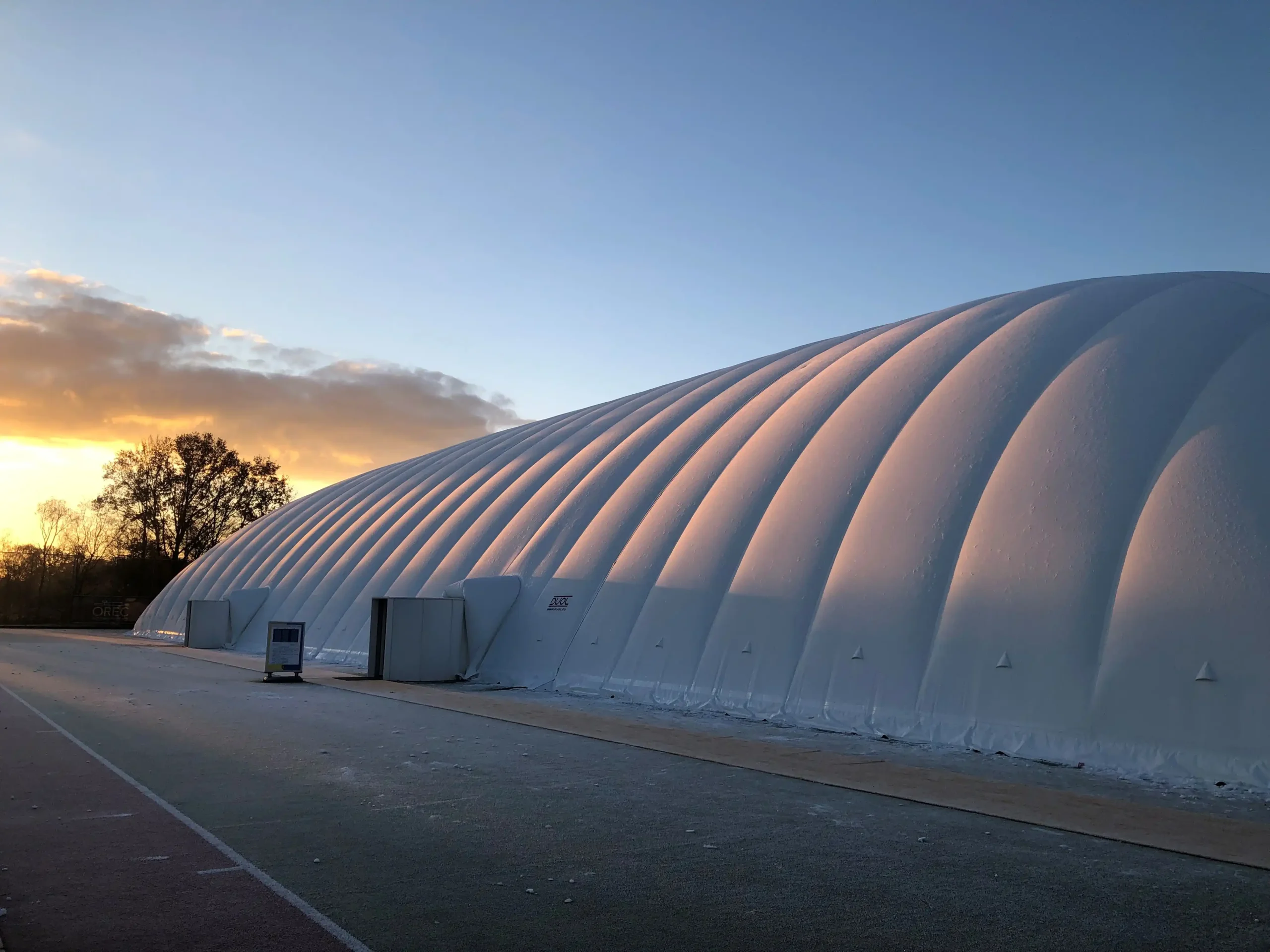
For the second winter in a row, the number of hockey clubs in Belgium benefitting from an RSI SPORTS airdome, has gone up. The affordability, comfort and ease of installation of these domes enables these clubs to continue hosting members and to generate additional income, at a time of the year when everything else is down.
Hockey is booming, and particularly in Belgium. Since 2008, the sport has experienced an approximately 8% growth per annum. With over a third of the active players being younger than 35 years old, clubs know full well the importance of both facilitating and pleasing their constituency. If not, they stand a chance of losing them to other activities or hobbies and losing them forever. “We started off with three teams five years ago. This year, we will have 18 teams playing league games in an indoor competition, and I envision we can grow to 22 or 23 teams next winter,” says Jacko Verheijen of HC Lokeren. Since early November, the club has had an RSI SPORTS airdome at its own site. Their dependence on public facilities to facilitate indoor hockey was the biggest hindrance to grow the sport, he explains. “It would take a 20-minute drive by car to get the nearest indoor venue. Many of our members viewed this as too far or inconvenient to continue playing during wintertime.” Youth in Belgium usually get around on bicycles, but a distance it takes a car 20 minutes to cover is usually considered to be way too far to cycle. Verheijen also points to the shared-use principle that is common for public venues in Europe. Particularly during winter, such a venue would be way too popular. “This limited our opportunity for growth, as it was dictated by the availability of additional timeslots, something that was seldom possible.”
The situation is not unique to HC Lokeren. HC Blackbirds is another club that invested in an RSI SPORTS airdome. “It is the most cost-effective option for having your own venue,” treasures Sven Moresi points out. “The alternative would have been a tent with a frame to span the distance. The erection and dismantling of such a tent requires a team of skilled professionals. Furthermore, the insulation capacity of such a tent is much lower, hence you’ll also be spending more on heating to provide a comfortable indoor temperature.” He concluded that the total-cost of ownership of an RSI SPORTS airdome is superior “especially in light of the grant the government has made available whereby, we, as a club, will only have to carry a third of the investment cost.”
No hidden costs
The grant Moresi refers to, is the grant for supra-local sports infrastructure the Belgian authorities provide. The grant supports investments in sports infrastructure (new construction or renovation) to improve, modernise and increase the accessibility of sports infrastructure. For applications that have been approved, both the regional as well as local government will take responsibility for funding a third of the required budget. “This balance we were left with is much easier for us to fund or to carry,” the HC Blackbirds treasurer points out. The club managed to fund the balance out of its own pocket. However, a fund raiser could also have been considered.
The grant only covers the investment in, in this case, a tent or dome, but excludes labour cost, costs associated with permits or paperwork that the erection or dismantling activities might require, or the cost of hiring specialised equipment to erect to conduct the work. Think of cranes for lifting the beams or cherry pickers to provide a platform for technicians qualified to work at heights to work from. “These costs can be quite substantial and would have, inevitably, cropped up in the final cost. On the other hand, our new RSI SPORTS airdome doesn’t use elements, as it is self-supporting. Once you understand the concept, it can be erected or dismantled by volunteers, such as members of the club. The total cost of ownership of this solution worked out to be the lowest of all options possible,” Moresi noted during a seminar that was hosted by the Belgian hockey federation. As the dome is fixed to the ground by means of strategically placed steel screws, the existing (artificial turf) surface is not affected by the construction.
Superior insulation
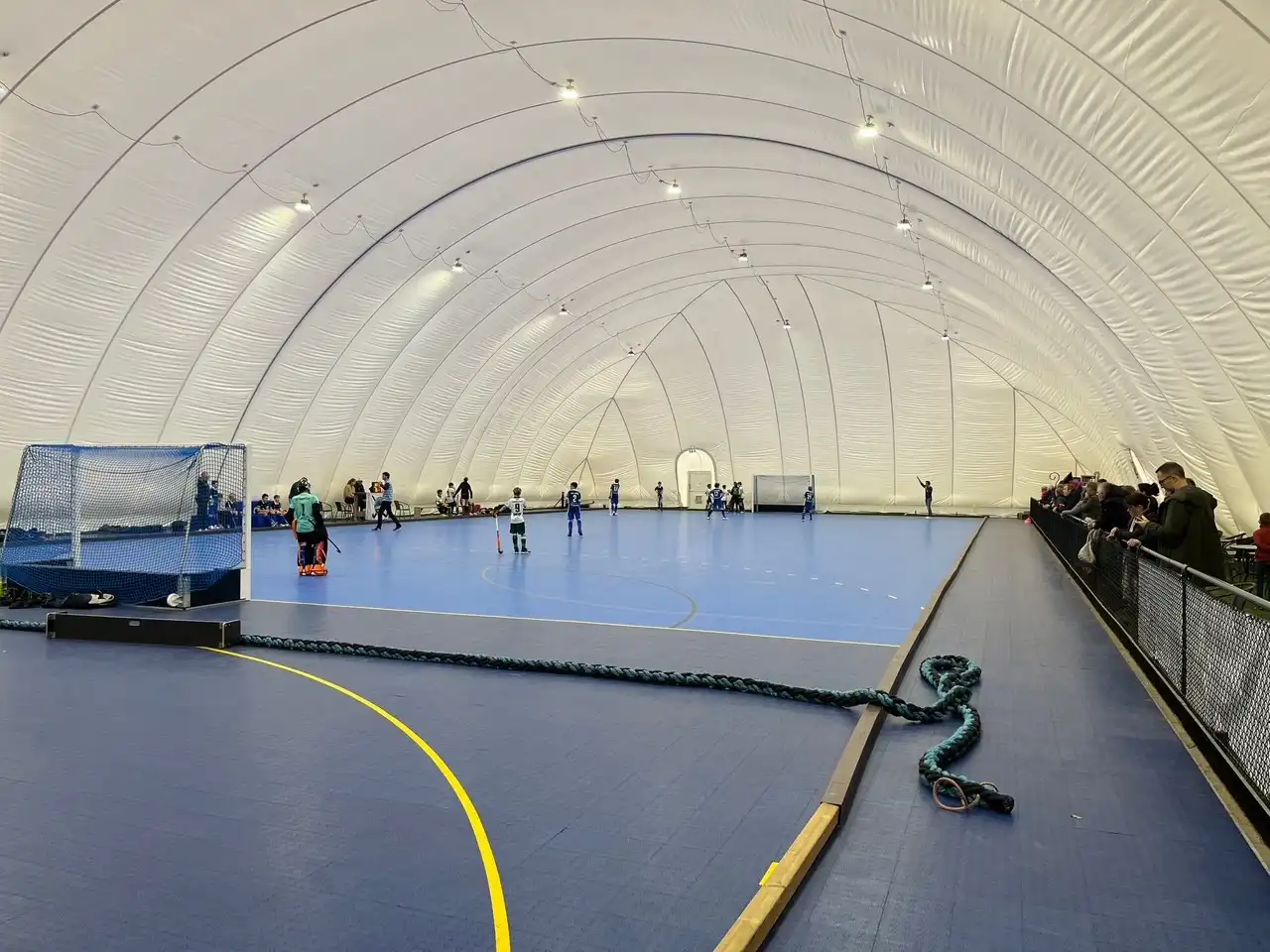
The dome uses air pressure to remain upright. The air in the air cavity between the outer and inner membranes provides a slightly higher internal air pressure than the air outside. “The air also serves as an insulator, which is why the indoor temperature doesn’t fluctuate but is being kept to a comfortable 13 degrees Celsius,” Moresi says. It’s a comfort that Frederik Gailly of HC Gantoise likes to point out too. In his view it is essential to consider comfort, in addition to providing good infrastructure. “Our efforts and decisions will be reflected in the results of the games. The better the results, the more joy.”
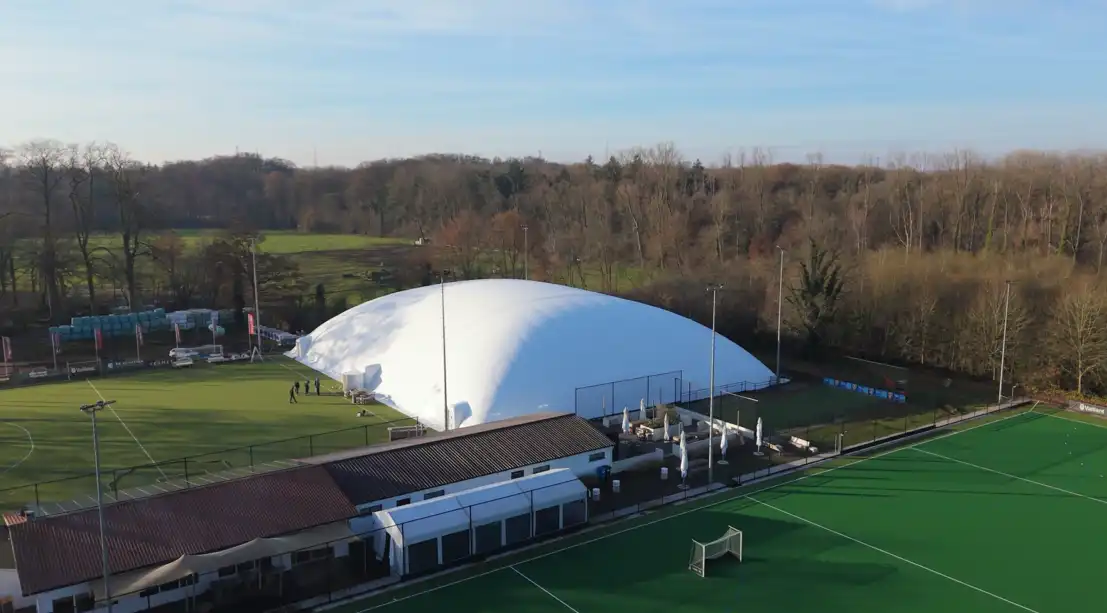
The dome at HC Gantoise, like the one at HC Blackbirds, covers half of the existing artificial turf field, thereby delivering two indoor hockey courts. In addition to the dome, HC Gantoise acquired also the temporary flooring and boarding from RSI SPORTS. The company aspires to be a true one-stop shop. “It is very convenient to have a supplier who can help you out with every element or component to provide indoor hockey,” Gailly adds.
The dome at HC Lokeren is smaller in size. “Our dome perfectly fits a small training ground we have on site,” Verheijen says. The 1,650m2 that have now been covered, will be enough to provide one indoor hockey field. “Our club has approximately 650 members. The dome allows us to accommodate the 18 teams that will play indoor hockey this winter.” Instead of investing in a dome for themselves, the club has entered into a lease-buy agreement for the dome with RSI SPORTS. It is currently also using a pre-owned floor. “We always try to work with the club and the budget they have available. Fortunately, we had a dome available that was used in the past for hiring out. Its dimensions perfectly fitted that of their site,” Anton van Oirschot of RSI SPORTS points out. In addition to domes, the company also has its own boarding as well as modular interlocking sports tiles to produce a floor for a variety of indoor sports. A unique polyprint technology even allows the floor to be customised according to the preferences by the club.
Like HC Gantoise and HC Blackbirds, HC Lokeren is confident that the convenience of having a high-quality, comfortable, and easy to operate affordable indoor facility at their own site will further contribute to the popularity of the sports and the club. It is a development several other Belgian clubs have experienced in the past, and likely will make more decide in the coming summer to also invest in an RSI SPORTS airdome.